
Table of Contents
- What Makes a Promotional Video High Impact?
- Promotional Video Best Practices for UK Businesses
- The Ideal Promotional Video Length for Each Platform
- Promotional Video Script Templates You Can Adapt
- Building an Effective Video Marketing Strategy for SMEs
- Common Mistakes That Undermine Promotional Video Impact
- Frequently Asked Questions
Last Updated: September 28, 2026
What Makes a Promotional Video High Impact?
A high impact promotional video is a short film built around one clear objective, where every shot, cut and line of script earns its place. It looks professional, sounds natural, and gives the viewer a reason to act. At ERS Video, we see the difference constantly: a well-planned promotional video holds attention to the final frame, while a rushed one gets scrolled past in seconds.
The distinction rarely comes down to budget. It comes down to planning. A promotional video that opens with a real problem, shows a real face, and lands a clear next step will outperform a slicker film that says nothing specific.
Here is what separates the two, and how to build the first kind.
Promotional Video Best Practices for UK Businesses
Strong promotional video best practices start long before anyone switches on a camera. They begin with a written purpose, a named audience, and a decision about where the finished film will live. Get those three right and the rest follows.
Plan the Purpose Before the Camera Rolls
One video cannot do everything. A film designed to explain a service will not also work as a recruitment ad or a social media teaser. Pick a single job for the promotional video and write it down: build trust, explain a product, drive bookings, or introduce the team.
Once the purpose is fixed, the format usually decides itself. A trust-building film needs faces and voices. A product explainer needs clean shots of the product in use. According to guidance from the UK’s advertising regulator on video ad content, claims made in marketing content must be honest and substantiated, so agree early on what you can actually prove on camera.
Capture Real People and Real Workplaces
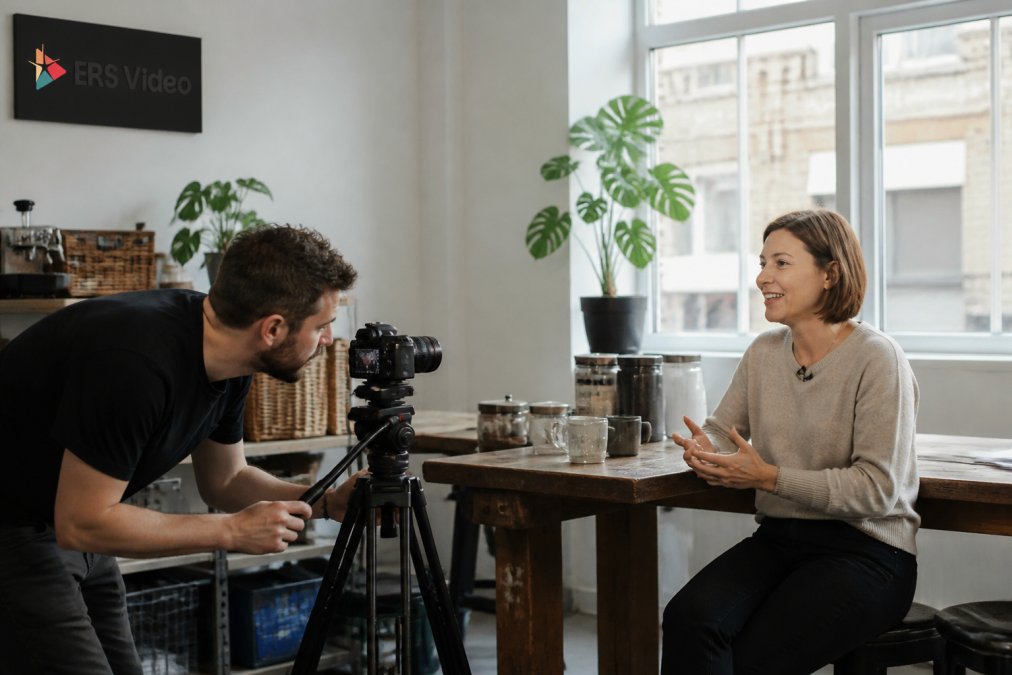
Audiences trust footage they recognise as genuine. Filming staff at their own desks, in their own workshop, or on site does more for credibility than any stock clip.
A common mistake is tidying the workplace until it looks like nobody works there. Keep the tools, the stock, the half-finished job. What most guides miss is that the small imperfections are what make a promotional video feel real rather than staged. Interviews with actual team members, filmed on location, give viewers a person to believe.
The Ideal Promotional Video Length for Each Platform
The ideal promotional video length depends entirely on where it will be watched, not on how much footage you have. A film that works on a website will usually fail on a social feed, and the reverse is just as true.
| Platform | Ideal Length | Best For |
|---|---|---|
| Social media feed | 15-30 seconds | Awareness, quick hooks |
| Website homepage | 60-90 seconds | Explaining what you do |
| Landing page | 30-60 seconds | Driving one specific action |
| Email campaign | 45-60 seconds | Re-engaging existing contacts |
| Trade show or event loop | 2-3 minutes | Standing out from a busy room |
The pattern is simple: the shorter the attention window, the shorter the promotional video. On a landing page, a viewer has already shown interest, so you can take a little longer. On a scrolling feed, you have seconds to earn the next second.
Cut a 90-second film down to a 20-second version by keeping only the opening hook and the closing call to action. That short cut often performs better on social than the full film, and it costs nothing extra to produce.
Promotional Video Script Templates You Can Adapt
A good script template removes the blank-page problem without making every promotional video sound the same. Use these two structures as starting points, then replace the placeholders with your own specifics.
The 30-Second Problem and Solution Template
This format works for social media and landing pages, where clarity beats detail.
[0-5s] Show the problem. “Every week, [your customer] loses hours to [specific frustration].”
[5-15s] Show your solution in action. “[Your business] handles [task] so you can [outcome].”
[15-25s] Prove it. A real customer or team member says one sentence about the result.
[25-30s] Call to action. “[Visit our website / book a call] to get started.”
The 90-Second Brand Story Template
Better suited to a homepage or an email, this version builds trust over a slightly longer run.
[0-10s] Open with a real scene from the business, no voiceover.
[10-30s] Introduce the people behind the work and what they care about.
[30-60s] Show the process or the product, with one clear differentiator.
[60-80s] Include a short customer comment or result.
[80-90s] Close with a direct invitation to get in touch.
Both templates share one rule: the first five seconds must give the viewer a reason to keep watching.
Building an Effective Video Marketing Strategy for SMEs
An effective video marketing strategy for SMEs is built around repetition and consistency, not one big production. A single promotional video, however good, tends to fade quickly. A steady flow of shorter films keeps your business visible.
Start by mapping where video can slot into what you already do: your website, your social channels, your email list, and any events you attend. Then decide how often you can realistically produce something new. Many small teams find that one filming session can yield several clips, which stretches the value of a single shoot.
This is where working with a production partner pays off. A bespoke approach means the filming is planned around your actual marketing calendar rather than treated as a one-off. ERS Video builds promotional content around the specific objectives of each client, from interviews and on-site filming to aerial footage where it adds something the ground-level shots cannot.
The businesses that get the most from promotional video are not the ones with the biggest budgets. They are the ones that plan one clear purpose per film and reuse the footage across several channels.
Common Mistakes That Undermine Promotional Video Impact
Most promotional videos that underperform fail for predictable reasons, and nearly all of them are avoidable. The footage is often fine; the thinking behind it is not.
- No clear audience. A film aimed at everyone speaks to no one. Name the viewer before you write a word.
- Leading with the company. Opening with your own history loses viewers. Open with the viewer’s problem instead.
- Ignoring sound. Poor audio ruins an otherwise strong promotional video faster than soft focus ever will. Budget for a proper microphone and a quiet room.
- Skipping the call to action. If the viewer does not know what to do next, they will do nothing.
- One video, one platform. A film shot only for a wide screen will look wrong on a phone. Plan the aspect ratios you need before filming.
A practical check from the Information Commissioner’s Office guidance on filming and personal data is worth building into your planning too: if people appear on camera, get their consent in writing before the shoot, not after.
Getting promotional video right is less about equipment and more about deciding, in advance, what each film is for. That is the work ERS Video does with every client: a personal, flexible service that shapes the shoot around your objectives, whether that means interviews at your workplace, aerial footage of your site, or a short social cut from the same session.
Frequently Asked Questions
What makes a promotional video high impact?
A high impact promotional video combines a clear purpose, a strong opening hook, and authentic footage of real people and real workplaces. It is short enough to hold attention, usually between 30 and 90 seconds for social platforms, and ends with one specific call to action. The video should communicate what your business does and why it matters within the first few seconds, before the viewer scrolls past.
How do you structure a successful promotional video?
Most successful promotional videos follow a simple structure: a hook in the first three to five seconds, a clear statement of the problem or need, your solution shown in action, and a closing call to action. Promotional video script templates help here. The 30-second problem-and-solution format works well for social media ads, while a 90-second brand story suits websites and email campaigns where viewers are already interested.
What is the ideal length for a promotional video in 2026?
The ideal promotional video length depends on where it will be shown. Social media ads perform best at 15 to 30 seconds, while website homepage videos can run 60 to 90 seconds. For a detailed brand story or case study, two to three minutes is acceptable if the content stays engaging. Shorter videos generally hold attention better, so cut anything that does not move the message forward.
How can SMEs improve their video marketing ROI?
An effective video marketing strategy for SMEs starts with setting one clear goal per video, such as generating enquiries or promoting a specific service. Reuse footage across platforms by editing one shoot into multiple formats. Track views, watch time, and enquiries rather than just likes. Working with a production company that offers flexible packages and aerial videography can also stretch a limited budget further.
What are the essential elements of a professional promotional video?
Professional promotional videos share several elements: clean audio, steady footage, good lighting, and a clear message delivered by real people from your business. Interviews with staff or customers add credibility. A consistent brand style, including colours and logo placement, ties the video to your other marketing. A defined call to action at the end tells viewers exactly what to do next.
How do you measure the success of a promotional video campaign?
Measure success against the goal you set before filming. For awareness campaigns, track views and watch time. For lead generation, track click-through rates and enquiries attributed to the video. Platform analytics on YouTube, LinkedIn, and Meta show where viewers drop off, which helps you refine future edits. Comparing results across videos over time reveals which strategies work best for your audience.